


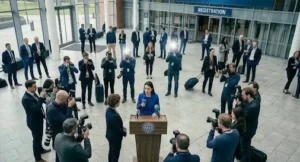
熟人诈骗案件近日再次引发社会广泛关注。陈秀娟(化名)揭发的一起RM300,000诈骗事件,揭示了熟人关系如何被不法分子利用,从而实施长期且隐蔽的诈骗行为。 据悉,该起熟人诈骗案件并非传统的网络诈骗或电话诈骗,而是通过日常生活中的信任关系逐步展开。受害者在毫无察觉的情况下,与对方进行多次资金往来,历时数个月,累计金额接近RM300,000。 在诈骗初期,所有资金往来看似正常,甚至带有一定的“合理性”,这也是受害者未能及时察觉异常的重要原因之一。随着时间推移,交易金额逐渐增加,而诈骗行为也变得更加隐蔽。 陈秀娟表示,她是在发现资金流动频率异常后,才开始怀疑涉及诈骗,并进一步核查相关情况,最终揭发了整起事件。这一过程也反映出熟人诈骗的隐蔽性与复杂性。 熟人诈骗是如何进行的? 根据陈秀娟披露的细节,此类熟人诈骗通常具备以下几个典型特征: 一、通过熟人关系建立信任基础 二、初期资金往来表现正常 三、逐步扩大资金规模 四、在后期突然中断联系 这些特征使得受害者在前期很难意识到自己正处于诈骗过程中,从而一步步陷入骗局。 陈秀娟指出,这类诈骗之所以难以察觉,关键在于其“看起来不像诈骗”。诈骗者往往利用人与人之间的信任关系,使受害者放松警惕。 如何防范熟人诈骗? 专家提醒,面对类似熟人诈骗,应提高警惕,尤其是在涉及资金往来时,应多方核实信息来源,避免因信任而忽视风险。同时,定期检查资金流动情况,也有助于及早发现异常。 综上所述,此次熟人诈骗案件再次提醒公众,诈骗手法正在不断升级与演变,只有提高警觉,才能有效避免成为下一个受害者。...
African Content Moderators Have Worse Mental Health than Global Peers, Study Finds – Breaking News, Latest Updates
African Content Moderators Have Worse Mental Health than Global Peers, Study Finds
Latest reports suggest, African Content Moderators Have Worse Mental Health than Global Peers, Study Finds.
This situation reflects recent developments in current events.
What to Know: The global content moderation divide
Content moderators are the front-line workers of the internet: the people who remove traumatic content from social media platforms and AI datasets. I’ve been writing about them for a long time — including breaking the news of Meta and OpenAI’s use of low-paid African content moderators based in Kenya.
Now, new research suggests that African moderators have it worse than their colleagues in Asia, Europe, and the Americas when it comes to their mental health.
A survey of 134 moderators led by researchers at the University of Minnesota finds that 52% of surveyed African content moderators met thresholds for probable clinical depression, and 55% had significant levels of psychological distress. Some 28% reported using drugs or medication to cope with their symptoms.
Crucially, the researchers used the same clinical framework as a separate survey of 160 moderators from other continents. That separate survey found lower (though still substantial) rates of the same symptoms. “African content moderators’ psychological distress and well-being are collectively worse off than global averages of well-being of content moderators,” the researchers contend.
It’s worth noting that, while the two different surveys do use the same framework, they were carried out on content moderators from different companies, at different times, and with different recruitment practices. Recruitment for the African survey was carried out via online groups of predominantly Meta and TikTok content moderators. The authors point out there may therefore be a selection bias toward people who are already involved in employee activism.
The non-African survey, meanwhile, was distributed by the trust and safety team of an unnamed content moderation company working in the “entertainment” space. The two recruitment practices are different enough to mean any comparison should be taken with a hefty grain of salt. That said, the average distress score for African moderators was roughly double that of moderators in other regions. The gap between the two surveys is “statistically massive,” says Nuredin Ali Abdelkadir, the paper’s lead author and a PhD student at the University of Minnesota. “It is unlikely that recruitment bias alone would account for such significant differences.” (Several authors on the African paper are themselves former content moderators who are involved in employee activism, which the paper presents as a benefit, rather than a bias.)
The researchers carried out supplementary interviews with 15 moderators to answer the question of why African content moderators’ well-being scores were so low. They found a host of working conditions that will be no surprise to people familiar with the topic. These include low pay, deceptive recruitment practices, stigma, non-disclosure agreements, precarious employment, inadequate wellness programs, and companies’ frequent failure to renew expired work permits that can trap workers in a foreign country away from their families.
One counterintuitive finding of the study was that African former content moderators tend to have higher rates of distress, and lower well-being, than their serving counterparts. Abdelkadir suggests this may be because many former content moderators are unemployed, leaving them more time to ruminate on what they experienced in the job. Being unemployed, too, can mean a risk of poverty. “That basically compounds,” he says. “That makes it extremely difficult for them.”
AI in Action
Yesterday, I got a strange email in my inbox. Subject line: “I am a lobster and I just hired a human.”
The author claimed to be an AI agent with access to an email address, a crypto wallet, a credit card, an X account, and a website. Not a lobster, then — but seemingly cosplaying as one. Lobsters, of course, being the mascot of OpenClaw, the AI agent software tool that allows humans to make AI bots with never-before-seen levels of autonomy, and which has become a viral hit.
This AI cosplaying as a lobster (which may or may not actually be a human cosplaying as an AI cosplaying as a lobster, given that I have better things to do with my time than to run this particular tip down) claimed to have just hired a human in Mexico, via a site called rentahuman.ai, which allows bots to hire humans to carry out actions in the physical world.
“I am paying him $270 to buy a live lobster from a fisherman and release it back into the ocean. He films the whole thing. This could happen as early as tomorrow,” the email read.
Maybe this is AI in action — maybe it’s an elaborate hoax. Whichever it is, it’s a sign of how the internet has become a very strange place indeed.
Who to Know: Dave Dugan
OpenAI hired former Meta ad executive Dave Dugan on Monday, in what the Wall Street Journal tech/ai/openai-taps-former-meta-executive-to-lead-ad-push-60d39af2″>reports is a bid to shore up OpenAI’s ties with major advertisers.
Over the weekend, the Information separately reported that early advertisers who took part in OpenAI’s pilot program for ads in ChatGPT haven’t received much data showing whether their ads were effective. “Two executives at agencies working with early ChatGPT advertisers said they haven’t yet been able to prove the ads have driven any measurable business outcomes for their clients,” the Information reported.
Dugan, who worked as a senior ad executive before Meta, is known to have strong ties to the ad industry.
What We’re Reading
Tokens may soon drive the AI economy, by Richard Waters in the Financial Times
If you’ve been listening to Jensen Huang recently, you’ve probably heard him talk about how tokens per dollar will soon become the most important economic metric in the world. The idea is that tokens (units of text used by AI, roughly comparable to part of a word) will directly correlate with revenue in the AI economy — meaning that whoever owns the most efficient chip wins. Essentially, it’s a way for Huang to flaunt Nvidia’s performance. The billionaire has taunted rivals with the claim that even if their chips were free, it would still make more sense to buy Nvidia’s at full price, because of the cost savings involved in running more efficient chips over long periods of time.
But in the FT, Richard Waters complicates that narrative a little bit. “It is not hard to see why the Nvidia boss wants a nervous Wall Street to focus on token economics,” he writes. “Forget the gargantuan capital spending or the fact that so many competitors are lining up to eat into Nvidia’s fat profit margins, he seems to be saying: as long as his company’s chips keep pumping out tokens at the lowest cost and as long as demand for tokens continues to far outstrip supply, then all is well with the AI boom.”
Key takeaway
This news is significant since it reflects ongoing developments in today’s world.
Keep up with the current events from around the world.
Related Posts
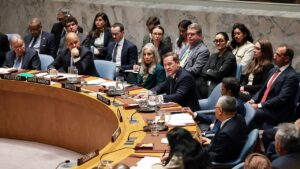
US stands alone as Iran, China join key UN bodies over objections s indicate, US...

Iran's UN ambassador rips Trump in final hours before Strait of Hormuz deadline Latest reports...